Acouple weeks ago I turned 30. Leading up to my birthday I wrote a post on what I learned in my 20s.
But I did something else. I sent an email out to my subscribers (subscribe here) and asked readers age 37 and older what advice they would give their 30-year-old selves. The idea was that I would crowdsource the life experience from my older readership and create another article based on their collective wisdom.
The result was spectacular. I received over 600 responses, many of which were over a page in length. It took me a solid three days to read through them all and I was floored by the quality of insight people sent.
So first of all, a hearty thank you to all who contributed and helped create this article.
While going through the emails what surprised me the most was just how consistent some of the advice was. The same 5-6 pieces of advice came up over and over and over again in different forms across literally 100s of emails. It seems that there really are a few core pieces of advice that are particularly relevant to this decade of your life.
Below are 10 of the most common themes appearing throughout all of the 600 emails. The majority of the article comprises dozens of quotes taken from readers. Some are left anonymous. Others have their age listed.
1. START SAVING FOR RETIREMENT NOW, NOT LATER
“I spent my 20s recklessly, but your 30s should be when you make a big financial push. Retirement planning is not something to put off. Understanding boring things like insurance, 401ks & mortgages is important since its all on your shoulders now. Educate yourself.” (Kash, 41)
The most common piece of advice — so common that almost every single email said at least something about it — was to start getting your financial house in order and to start saving for retirement… today.
There were a few categories this advice fell into:
- Make it your top priority to pay down all of your debt as soon as possible.
- Keep an “emergency fund” — there were tons of horror stories about people getting financially ruined by health issues, lawsuits, divorces, bad business deals, etc.
- Stash away a portion of every paycheck, preferably into a 401k, an IRA or at the least, a savings account.
- Don’t spend frivolously. Don’t buy a home unless you can afford to get a good mortgage with good rates.
- Don’t invest in anything you don’t understand. Don’t trust stockbrokers.
One reader said, “If you are in debt more than 10% of your gross annual salary this is a huge red flag. Quit spending, pay off your debt and start saving.” Another wrote, “I would have saved more money in an emergency fund because unexpected expenses really killed my budget. I would have been more diligent about a retirement fund, because now mine looks pretty small.”

And then there were the readers who were just completely screwed by their inability to save in their 30s. One reader named Jodi wishes she had started saving 10% of every paycheck when she was 30. Her career took a turn for the worst and now she’s stuck at 57, still living paycheck to paycheck. Another woman, age 62, didn’t save because her husband out-earned her. They later got divorced and she soon ran into health problems, draining all of the money she received in the divorce settlement. She, too, now lives paycheck to paycheck, slowly waiting for the day social security kicks in. Another man related a story of having to be supported by his son because he didn’t save and unexpectedly lost his job in the 2008 crash.
The point was clear: save early and save as much as possible. One woman emailed me saying that she had worked low-wage jobs with two kids in her 30s and still managed to sock away some money in a retirement fund each year. Because she started early and invested wisely, she is now in her 50s and financially stable for the first time in her life. Her point: it’s always possible. You just have to do it.
2. START TAKING CARE OF YOUR HEALTH NOW, NOT LATER
“Your mind’s acceptance of age is 10 to 15 years behind your body’s aging. Your health will go faster than you think but it will be very hard to notice, not the least because you don’t want it to happen.” (Tom, 55)
We all know to take care of our health. We all know to eat better and sleep better and exercise more and blah, blah, blah. But just as with the retirement savings, the response from the older readers was loud and unanimous: get healthy and stay healthy now.
So many people said it that I’m not even going to bother quoting anybody else. Their points were pretty much all the same: the way you treat your body has a cumulative effect; it’s not that your body suddenly breaks down one year, it’s been breaking down all along without you noticing. This is the decade to slow down that breakage.

And this wasn’t just your typical motherly advice to eat your veggies. These were emails from cancer survivors, heart attack survivors, stroke survivors, people with diabetes and blood pressure problems, joint issues and chronic pain. They all said the same thing: “If I could go back, I would start eating better and exercising and I would not stop. I made excuses then. But I had no idea.”
3. DON’T SPEND TIME WITH PEOPLE WHO DON’T TREAT YOU WELL
“Learn how to say “no” to people, activities and obligations that don’t bring value to your life.” (Hayley, 37)

After calls to take care of your health and your finances, the most common piece of advice from people looking back at their 30-year-old selves was an interesting one: they would go back and enforce stronger boundaries in their lives and dedicate their time to better people. “Setting healthy boundaries is one of the most loving things you can do for yourself or another person.” (Kristen, 43)
What does that mean specifically?
“Don’t tolerate people who don’t treat you well. Period. Don’t tolerate them for financial reasons. Don’t tolerate them for emotional reasons. Don’t tolerate them for the children’s sake or for convenience sake.” (Jane, 52)
“Don’t settle for mediocre friends, jobs, love, relationships and life.” (Sean, 43)
“Stay away from miserable people… they will consume you, drain you.” (Gabriella, 43)
“Surround yourself and only date people that make you a better version of yourself, that bring out your best parts, love and accept you.” (Xochie)
People typically struggle with boundaries because they find it difficult to hurt someone else’s feelings, or they get caught up in the desire to change the other person or make them treat them the way they want to be treated. This never works. And in fact, it often makes it worse. As one reader wisely said, “Selfishness and self-interest are two different things. Sometimes you have to be cruel to be kind.”
When we’re in our 20s, the world is so open to opportunity and we’re so short on experience that we cling to the people we meet, even if they’ve done nothing to earn our clingage. But by our 30s we’ve learned that good relationships are hard to come by, that there’s no shortage of people to meet and friends to be made, and that there’s no reason to waste our time with people who don’t help us on our life’s path.
4. BE GOOD TO THE PEOPLE YOU CARE ABOUT
“Show up with and for your friends. You matter, and your presence matters.” (Jessica, 40)
Conversely, while enforcing stricter boundaries on who we let into our lives, many readers advised to make the time for those friends and family that we do decide to keep close.
“I think sometimes I may have taken some relationships for granted, and when that person is gone, they’re gone. Unfortunately, the older you get, well, things start to happen, and it will affect those closest to you.” (Ed, 45)
“Appreciate those close to you. You can get money back and jobs back, but you can never get time back.” (Anne, 41)
“Tragedy happens in everyone’s life, everyone’s circle of family and friends. Be the person that others can count on when it does. I think that between 30 and 40 is the decade when a lot of shit finally starts to happen that you might have thought never would happen to you or those you love. Parents die, spouses die, babies are still-born, friends get divorced, spouses cheat… the list goes on and on. Helping someone through these times by simply being there, listening and not judging is an honor and will deepen your relationships in ways you probably can’t yet imagine.” (Rebecca, 40)
5. YOU CAN’T HAVE EVERYTHING; FOCUS ON DOING A FEW THINGS REALLY WELL
“Everything in life is a trade-off. You give up one thing to get another and you can’t have it all. Accept that.” (Eldri, 60)
In our 20s we have a lot of dreams. We believe that we have all of the time in the world. I myself remember having illusions that my website would be my first career of many. Little did I know that it took the better part of a decade to even get competent at this. And now that I’m competent and have a major advantage and love what I do, why would I ever trade that in for another career?
“In a word: focus. You can simply get more done in life if you focus on one thing and do it really well. Focus more.” (Ericson, 49)
Another reader: “I would tell myself to focus on one or two goals/aspirations/dreams and really work towards them. Don’t get distracted.” And another: “You have to accept that you cannot do everything. It takes a lot of sacrifice to achieve anything special in life.”
A few readers noted that most people arbitrarily choose their careers in their late teens or early 20s, and as with many of our choices at those ages, they are often wrong choices. It takes years to figure out what we’re good at and what we enjoy doing. But it’s better to focus on our primary strengths and maximize them over the course of lifetime than to half-ass something else.
“I’d tell my 30 year old self to set aside what other people think and identify my natural strengths and what I’m passionate about, and then build a life around those.” (Sara, 58)
For some people, this will mean taking big risks, even in their 30s and beyond. It may mean ditching a career they spent a decade building and giving up money they worked hard for and became accustomed to. Which brings us to…
6. DON’T BE AFRAID OF TAKING RISKS, YOU CAN STILL CHANGE
“While by age 30 most feel they should have their career dialed in, it is never too late to reset. The individuals that I have seen with the biggest regrets during this decade are those that stay in something that they know is not right. It is such an easy decade to have the days turn to weeks to years, only to wake up at 40 with a mid-life crisis for not taking action on a problem they were aware of 10 years prior but failed to act.” (Richard, 41)
“Biggest regrets I have are almost exclusively things I did *not* do.” (Sam, 47)
Many readers commented on how society tells us that by 30 we should have things “figured out” — our career situation, our dating/marriage situation, our financial situation and so on. But this isn’t true. And, in fact, dozens and dozens of readers implored to not let these social expectations of “being an adult” deter you from taking some major risks and starting over. As someone on my Facebook page responded: “All adults are winging it.”
“I am about to turn 41 and would tell my 30 year old self that you do not have to conform your life to an ideal that you do not believe in. Live your life, don’t let it live you. Don’t be afraid of tearing it all down if you have to, you have the power to build it all back up again.” (Lisa, 41)
Multiple readers related making major career changes in their 30s and being better off for doing so. One left a lucrative job as a military engineer to become a teacher. Twenty years later, he called it one of the best decisions of his life. When I asked my mom this question, her answer was, “I wish I had been willing to think outside the box a bit more. Your dad and I kind of figured we had to do thing A, thing B, thing C, but looking back I realize we didn’t have to at all; we were very narrow in our thinking and our lifestyles and I kind of regret that.”
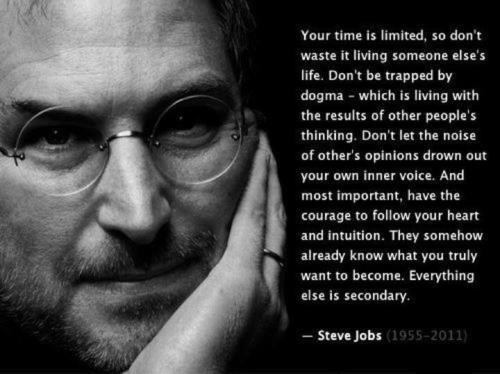
“Less fear. Less fear. Less fear. I am about to turn 50 next year, and I am just getting that lesson. Fear was such a detrimental driving force in my life at 30. It impacted my marriage, my career, my self-image in a fiercely negative manner. I was guilty of: Assuming conversations that others might be having about me. Thinking that I might fail. Wondering what the outcome might be. If I could do it again, I would have risked more.” (Aida, 49)
7. YOU MUST CONTINUE TO GROW AND DEVELOP YOURSELF
“You have two assets that you can never get back once you’ve lost them: your body and your mind. Most people stop growing and working on themselves in their 20s. Most people in their 30s are too busy to worry about self-improvement. But if you’re one of the few who continues to educate themselves, evolve their thinking and take care of their mental and physical health, you will be light-years ahead of the pack by 40.” (Stan, 48)
It follows that if one can still change in their 30s — and should continue to change in their 30s — then one must continue to work to improve and grow. Many readers related the choice of going back to school and getting their degrees in their 30s as one of the most useful things they had ever done. Others talked of taking extra seminars and courses to get a leg up. Others started their first businesses or moved to new countries. Others checked themselves into therapy or began a meditation practice.
As Warren Buffett once said, the greatest investment a young person can make is in their own education, in their own mind. Because money comes and goes. Relationships come and go. But what you learn once stays with you forever.
“The number one goal should be to try to become a better person, partner, parent, friend, colleague etc. — in other words to grow as an individual.” (Aimilia, 39)
8. NOBODY (STILL) KNOWS WHAT THEY’RE DOING, GET USED TO IT
“Unless you are already dead — mentally, emotionally, and socially — you cannot anticipate your life 5 years into the future. It will not develop as you expect. So just stop it. Stop assuming you can plan far ahead, stop obsessing about what is happening right now because it will change anyway, and get over the control issue about your life’s direction. Fortunately, because this is true, you can take even more chances and not lose anything; you cannot lose what you never had. Besides, most feelings of loss are in your mind anyway – few matter in the long term.”(Thomas, 56)
In my article about what I learned in my 20s, one of my lessons was “Nobody Knows What They’re Doing,” and that this was good news. Well, according to the 40+ crowd, this continues to be true in one’s 30s and, well, forever it seems; and it continues to be good news forever as well.
“Most of what you think is important now will seem unimportant in 10 or 20 years and that’s OK. That’s called growth. Just try to remember to not take yourself so seriously all the time and be open to it.” (Simon, 57)
“Despite feeling somewhat invincible for the last decade, you really don’t know what’s going to happen and neither does anyone else, no matter how confidently they talk. While this is disturbing to those who cling to permanence or security, it’s truly liberating once you grasp the truth that things are always changing. To finish, there might be times that are really sad. Don’t dull the pain or avoid it. Sorrow is part of everyone’s lifetime and the consequence of an open and passionate heart. Honor that. Above all, be kind to yourself and others, it’s such a brilliant and beautiful ride and keeps on getting better.” (Prue, 38)
“I’m 44. I would remind my 30 year old self that at 40, my 30s would be equally filled with dumb stuff, different stuff, but still dumb stuff… So, 30 year old self, don’t go getting on your high horse. You STILL don’t know it all. And that’s a good thing.” (Shirley, 44)
9. INVEST IN YOUR FAMILY; IT’S WORTH IT
“Spend more time with your folks. It’s a different relationship when you’re an adult and it’s up to you how you redefine your interactions. They are always going to see you as their kid until the moment you can make them see you as your own man. Everyone gets old. Everyone dies. Take advantage of the time you have left to set things right and enjoy your family.” (Kash, 41)
I was overwhelmed with amount of responses about family and the power of those responses. Family is the big new relevant topic for this decade for me, because you get it on both ends. Your parents are old and you need to start considering how your relationship with them is going to function as a self-sufficient adult. And then you also need to contemplate creating a family of your own.
Pretty much everybody agreed to get over whatever problems you have with your parents and find a way to make it work with them. One reader wrote, “You’re too old to blame your parents for any of your own short-comings now. At 20 you could get away with it, you’d just left the house. At 30, you’re a grown-up. Seriously. Move on.”
But then there’s the question that plagues every single 30-year-old: to baby or not to baby?
“You don’t have the time. You don’t have the money. You need to perfect your career first. They’ll end your life as you know it. Oh shut up… Kids are great. They make you better in every way. They push you to your limits. They make you happy. You should not defer having kids. If you are 30, now is the time to get real about this. You will never regret it.” (Kevin, 38)
“It’s never the ‘right time’ for children because you have no idea what you’re getting into until you have one. If you have a good marriage and environment to raise them, err on having them earlier rather than later, you’ll get to enjoy more of them.” (Cindy, 45)
“All my preconceived notions about what a married life is like were wrong. Unless you’ve already been married, everyone’s are. Especially once you have kids. Try to stay open to the experience and fluid as a person; your marriage is worth it, and your happiness seems as much tied to your ability to change and adapt as anything else. I wasn’t planning on having kids. From a purely selfish perspective, this was the dumbest thing of all. Children are the most fulfilling, challenging, and exhausting endeavor anyone can ever undertake. Ever.” (Rich, 44)

The consensus about marriage seemed to be that it was worth it, assuming you had a healthy relationship with the right person. If not, you should run the other way (See #3).
But interestingly, I got a number of emails like the following:
“What I know now vs 10-13 years ago is simply this… bars, woman, beaches, drink after drink, clubs, bottle service, trips to different cities because I had no responsibility other than work, etc… I would trade every memory of that life for a good woman that was actually in love with me… and maybe a family. I would add, don’t forget to actually grow up and start a family and take on responsibilities other than success at work. I am still having a little bit of fun… but sometimes when I go out, I feel like the guy that kept coming back to high school after he graduated (think Matthew McConaughey’s character in Dazed and Confused). I see people in love and on dates everywhere. “Everyone” my age is in their first or second marriage by now! Being perpetually single sounds amazing to all of my married friends but it is not the way one should choose to live their life.” (Anonymous, 43)
“I would have told myself to stop constantly searching for the next best thing and I would have appreciated the relationships that I had with some of the good, genuine guys that truly cared for me. Now I’m always alone and it feels too late.” (Fara, 38)
On the flip side, there were a small handful of emails that took the other side of the coin:
“Don’t feel pressured to get married or have kids if you don’t want to. What makes one person happy doesn’t make everyone happy. I’ve chosen to stay single and childless and I still live a happy and fulfilled life. Do what feels right for you.” (Anonymous, 40)
Conclusion: It seems that while family is not absolutely necessary to have a happy and fulfilling life, the majority of people have found that family is always worth the investment, assuming the relationships are healthy and not toxic and/or abusive.
10. BE KIND TO YOURSELF, RESPECT YOURSELF
“Be a little selfish and do something for yourself every day, something different once a month and something spectacular every year.” (Nancy, 60)
This one was rarely the central focus of any email, but it was present in some capacity in almost all of them: treat yourself better. Almost everybody said this in one form or another. “There is no one who cares about or thinks about your life a fraction of what you do,” one reader began, and, “life is hard, so learn to love yourself now, it’s harder to learn later,” another reader finished.
Or as Renee, 40, succinctly put it: “Be kind to yourself.”
Many readers included the old cliche: “Don’t sweat the small stuff; and it’s almost all small stuff.” Eldri, 60, wisely said, “When confronted with a perceived problem, ask yourself, ‘Is this going to matter in five years, ten years?’ If not, dwell on it for a few minutes, then let it go.” It seems many readers have focused on the subtle life lesson of simply accepting life as is, warts and all.
Which brings me to the last quote from Martin, age 58:
“When I turned forty my father told me that I’d enjoy my forties because in your twenties you think you know what’s going on, in your thirties you realize you probably don’t, and in your forties you can relax and just accept things. I’m 58 and he was right.”
Thank you to everyone who contributed.
source: https://markmanson.net/10-life-lessons-excel-30s
